
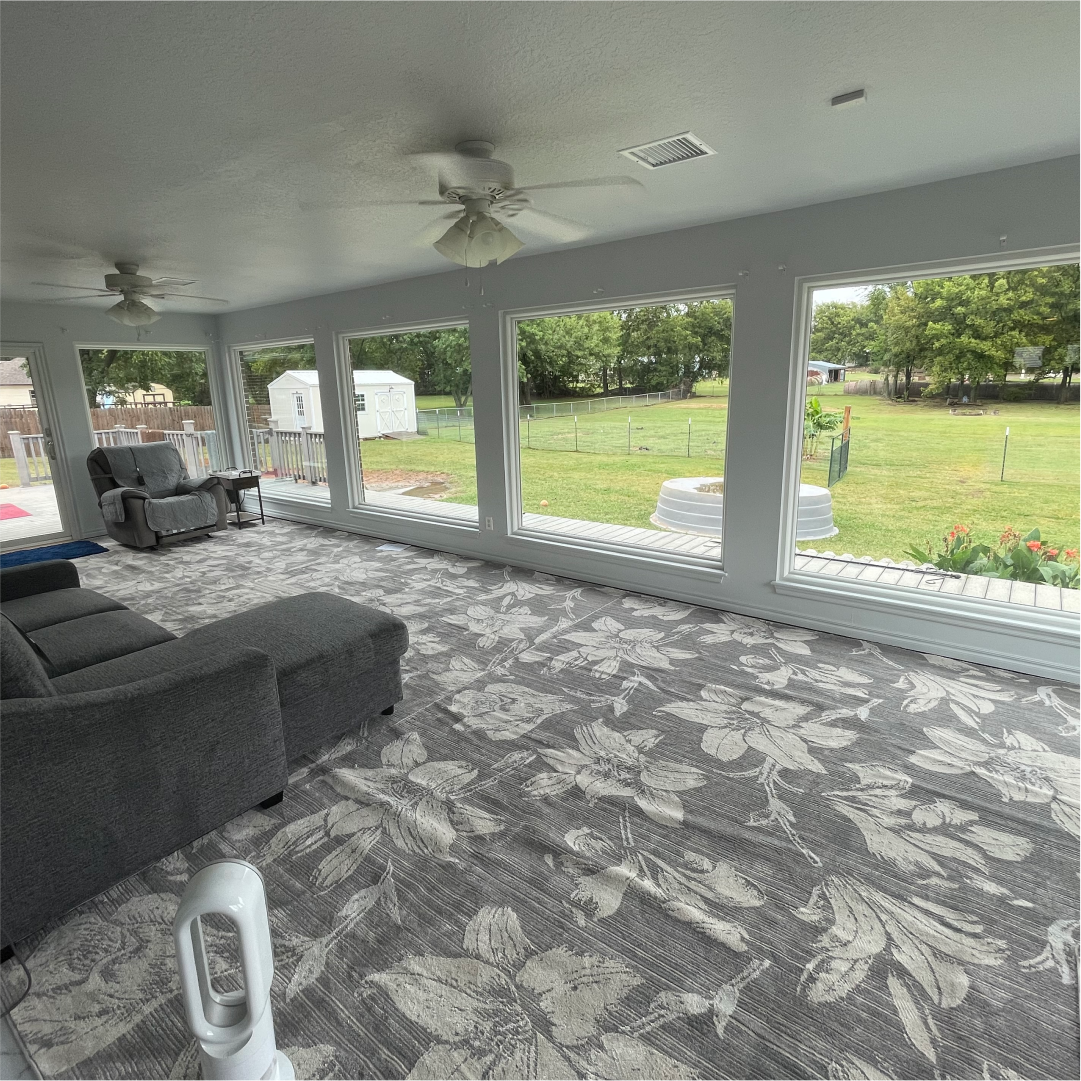
You've spent years getting the light right in this house. The sightlines from the kitchen to the water, the way the afternoon sun moves across the living room floor, the frame proportions that make a wall of glass feel like a piece of architecture instead of a hole in the wall. Then someone mentions hurricane season, and the word "impact-rated" lands like a threat to all of it. Most homeowners picture the same thing: thick aluminum bars, a fortress look, windows that read as insurance compliance rather than design.
That fear is reasonable. It's also outdated. The custom coastal home windows built for today's high-design Houston properties are engineered first for storm performance, but the frame technology behind them has changed enough that "protected" and "beautiful" are no longer opposite ends of a spectrum.
Key Takeaways
- Renewal by Andersen's Acclaim® Impact windows are built from Fibrex® composite, tested twice as strong as vinyl, with slimmer frame profiles than most impact-rated competitors.
- Acclaim® Impact windows are tested to AAMA/WDMA/CSA 101 I.S.2/A440-08 for wind and impact performance, and to ASTM F588 performance grade 40 for forced-entry resistance.
- Coastal Harris County (east of Highway 146) sits inside the Texas Windstorm Insurance Association's designated catastrophe area, where TDI-approved windstorm products matter for coverage, not just comfort.
- SmartSun™ glass blocks 95% of UV rays that fade art, upholstery, and hardwood, a real concern for a home built around interior finishes.
- The Renewal by Andersen limited warranty covers 20 years on glass and Fibrex material, 10 years on hardware, and 2 years on installation, non-prorated and fully transferable.
- Premium impact windows nationally run roughly $1,500 to $3,000+ per window installed, with custom shapes and oversized glass pushing higher; your actual number depends on size, glass package, and site conditions.
Do Hurricane Impact Windows Look Bulky or Industrial?
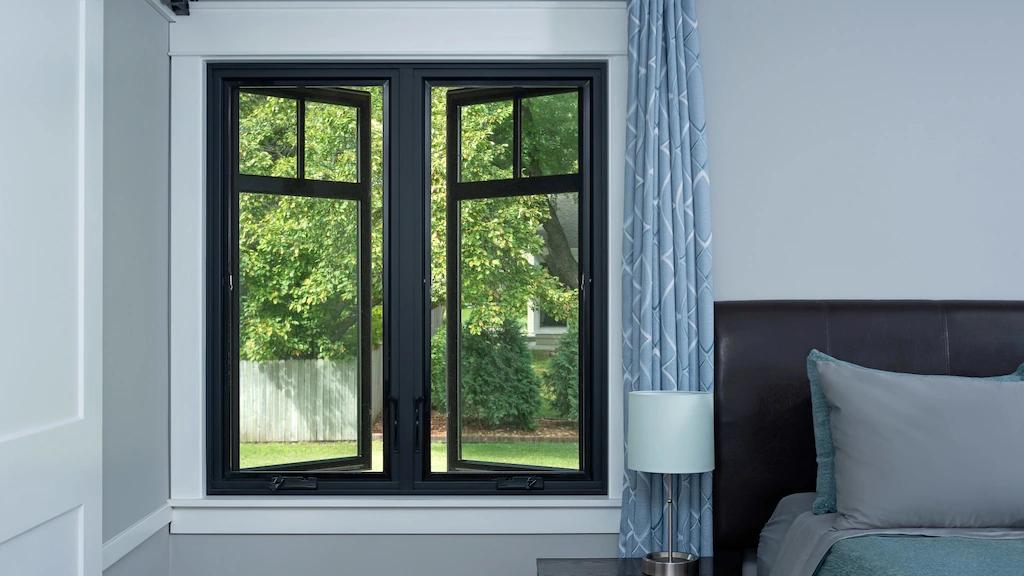
Not the well-engineered ones, and this is worth being specific about instead of just asserting it. The bulky look homeowners associate with impact glass comes from older-generation systems that compensated for missile-impact testing with thicker aluminum frames and heavier sightlines. Fibrex material handles that structural load differently. Because it's a reinforced composite rather than extruded metal, Acclaim® Impact windows are built with slimmer frames and larger glass area than many impact-resistant alternatives on the market, which means more of what you're looking at is view, not frame.
That said, "slim" is relative. If your architectural vision calls for the frameless, floor-to-ceiling glass walls you'd see in a coastal penthouse, that's a different product category entirely, closer to structural glazing than a replacement window, and it's worth being honest that Acclaim® Impact windows are a window system, not a curtain wall. For most single-family coastal homes in the Houston area, though, the frame-to-glass ratio on a well-built impact window is close enough to a standard window that most guests won't clock the difference until they ask about your last hurricane.
Does My Houston Home Actually Need Impact-Rated Glass?
Not automatically, and the answer depends on exactly where your home sits, not on being in "Houston" generally. Most homes across the metro aren't required by code to carry impact windows. But coastal Harris County, specifically the area east of Highway 146, falls inside the Texas Windstorm Insurance Association's designated catastrophe area, where TDI-approved windstorm products are often required to obtain or maintain windstorm insurance coverage. If you're closer inland, impact glass becomes a choice about performance and peace of mind rather than a coverage requirement. While Houston communities may not require impact-rated windows, counties like Galveston, Brazoria and Chambers likely do.
Either way, the underlying risk is the same one that shows up every summer: prolonged Gulf humidity, wind-driven rain, and the tropical storm or hurricane threat that puts flying debris through ordinary glass. When a window fails during a storm, the pressure change inside the house is what causes catastrophic structural damage, not just a broken pane.
It's worth confirming with a local code official or your design consultant exactly which designation applies to your address, since the line between "required" and "recommended" runs through specific streets, not zip codes.
How Does Fibrex Compare to Vinyl and Aluminum for a High-Design Coastal Home?
Fibrex is a proprietary Andersen composite made from reclaimed wood fiber and thermoplastic polymer, not a type of vinyl and not vinyl with a different name. The material behaves differently under coastal conditions. Fibrex has been tested twice as strong as vinyl, and where standard vinyl can soften, warp, or discolor under sustained heat and UV exposure, Fibrex is built to resist cracking, pitting, corrosion, and rot without needing repainting.
Aluminum, the other common impact-window frame material, is strong and holds a slim profile well. This is why you'll see it in modern coastal architecture. It's strong and holds a slim profile well, which is why you'll see it in modern coastal architecture. But it conducts heat and cold far more efficiently than Fibrex does, which shows up on your energy bill and, over time, in condensation at the frame in Houston's humidity. Fibrex blocks thermal transfer roughly 700 times better than aluminum.
| Attribute | Fibrex® | Vinyl | Aluminum |
|---|---|---|---|
| Relative strength | 2x vinyl | Baseline | Strong, but thin-wall sections can flex |
| Thermal performance | Insulates well | Insulates well | Conducts heat/cold |
| UV/heat stability | High | Can soften, discolor | High |
| Color/finish depth | Deep, durable finish | Limited, prone to fading | Wide finish range |
| Design flexibility | Slim profiles, custom colors | Limited custom color range | Very slim, modern look |
If your priority is the absolute thinnest possible sightline for a minimalist glass-wall aesthetic, aluminum-framed systems are a legitimate alternative worth having priced out. If your priority is a slim, custom-finished frame that also performs thermally and won't need repainting after a decade of Gulf sun, that's the case for Fibrex.
What Design Options Exist for Custom Coastal Windows?
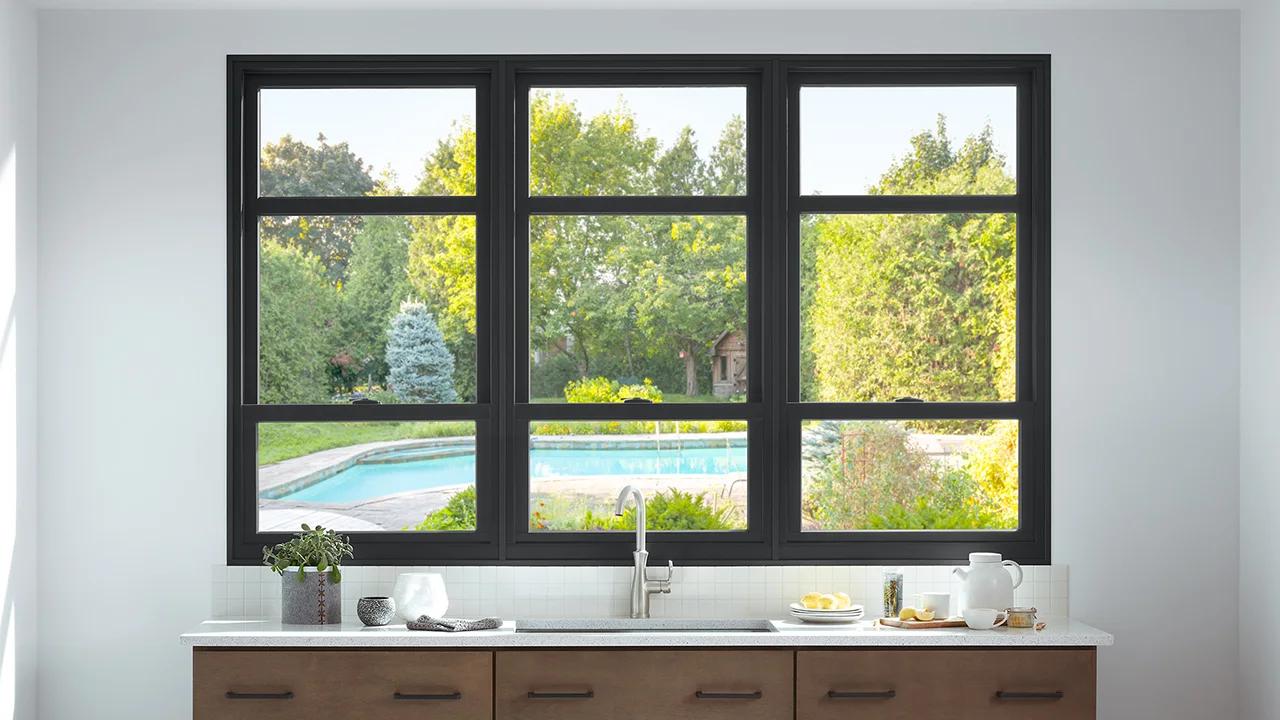
There are more Coastal window options than you may expect. Acclaim® Impact windows come in seven window styles and a full palette of exterior colors, including the deeper tones (black, dark bronze, forest green). Estate™ hardware finishes extend that further, with options like polished chrome, oil-rubbed bronze, and antique brass that let hardware function as a visible design detail instead of an afterthought.
Glass can be a design decision too. SmartSun™ glass is the highest-performing option for hot, humid, high-UV climates like Houston's, blocking 95% of UV rays without a heavy tint that would dull your interior light. If your home is closer to the water and needs it, the same Low-E4® Sun Glass option can also meet local "turtle glass" requirements in areas with coastal wildlife lighting ordinances, worth flagging early with your design consultant if your lot is near a protected shoreline.
Is Acclaim Impact Worth It for a Design-Forward Coastal Home?
For a homeowner who's already invested in the architectural and interior details of the house, yes. It's worth it if you actually value the design flexibility, because that's what you're paying the premium for over a basic code-compliant vinyl window. Acclaim® Impact windows carry a 20-year warranty on glass and Fibrex material, 10 years on hardware, and 2 years on installation, non-prorated and fully transferable if you sell the home, which is a stronger commitment than most impact-window brands offer.
Renewal by Andersen also handles design consultation, manufacturing, and installation as one company, which matters more on a custom coastal project than it does on a standard replacement, since window openings on older or architecturally distinct homes are rarely perfectly standard sizes. If your goal is the cheapest path to code compliance and you're not particular about frame color or hardware finish, a lower-cost impact vinyl window will likely serve you fine. If the windows need to hold up to your home's design standard as much as they hold up to the next tropical storm.
The Decision, Simplified
Confirm your home's actual windstorm designation before you spec anything. Decide how much frame-to-glass ratio and finish flexibility genuinely matter to you versus a bare-minimum code solution. And get the warranty terms in writing, since a 20-year non-prorated commitment on glass and frame material is the kind of detail that separates a considered purchase from a rushed one.
Schedule a Consultation