
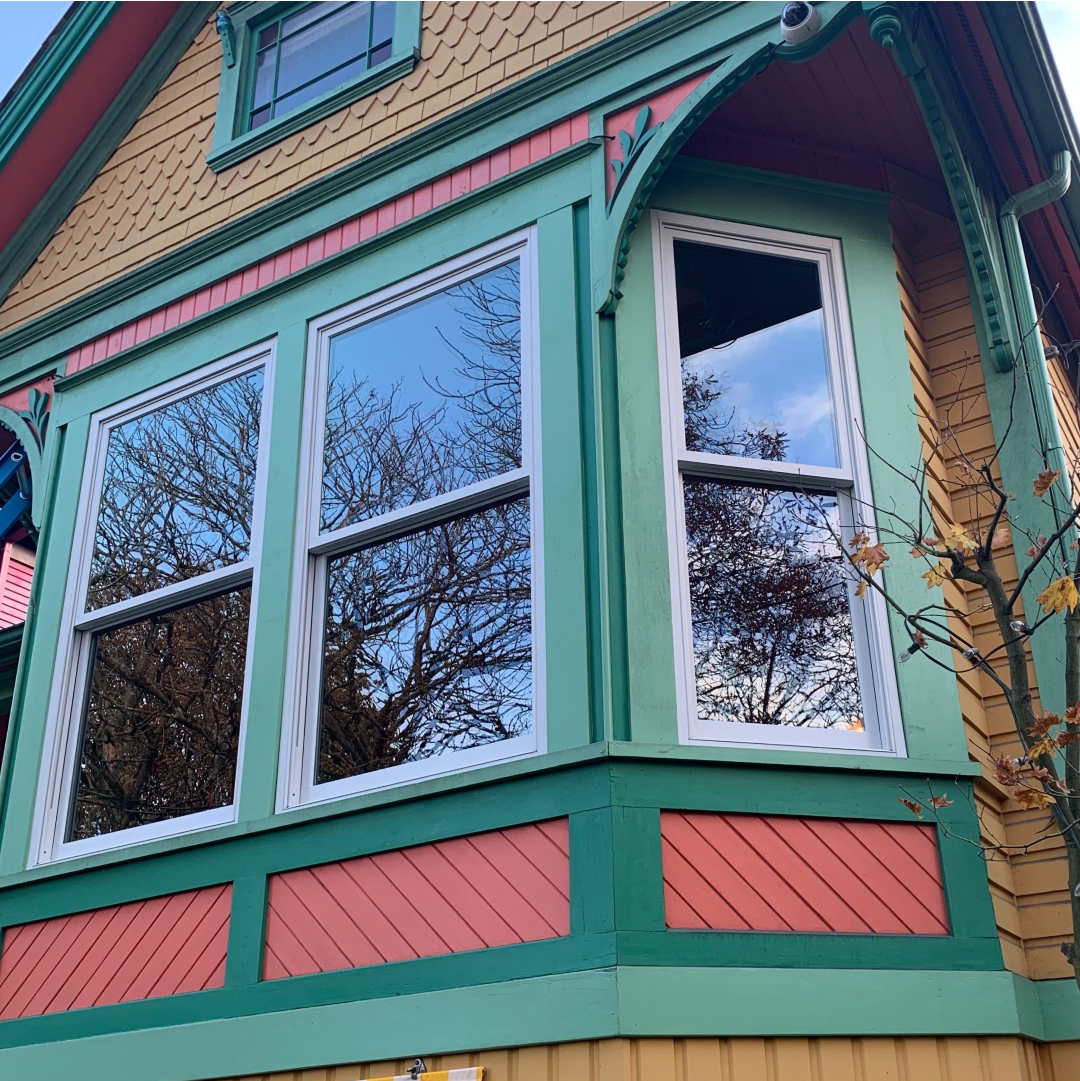
You bought the ranch with the low roofline and the wall of glass in the living room, and you fell for it exactly because it doesn't look like every other house on the block. Now the windows are original from the 1950s or 60s, or worse, someone already "updated" them with a style that fights everything the house is trying to do. Either way, you're facing the same question: how do you replace these windows without accidentally erasing the thing you bought the house for in the first place?
The good news is that mid-century modern homes are actually easier to get right than most architectural styles, once you know what the house is asking for.
Key Takeaways
- Mid-century modern architecture prioritizes horizontal lines, minimal ornamentation, and large expanses of glass that blur the line between indoors and outside.
- Casement, awning, picture, and gliding windows all match the style; traditional double-hung windows with grilles generally fight it.
- Kansas City's Broadmoor Ranch Historic District and Houston's Glenbrook Valley and Memorial Bend are three of the largest concentrations of original mid-century housing stock in our service area.
- Grille-free glass and darker exterior finishes (black, dark bronze) tend to preserve the clean, uncluttered look these homes were designed around.
- Composite window replacement generally runs somewhere in the $500 to $2,500+ per window range installed, and most homeowners phase the project rather than doing every window at once.
- Renewal by Andersen's Acclaim® windows come in seven styles and a full color range, which gives you the flexibility to match the original design intent rather than settling for whatever's standard.
What Makes a Window Style "Mid-Century Modern"?
It comes down to three things: horizontal lines, minimal ornamentation, and glass that does more work than usual. Mid-century modern homes, most of them built as ranch-style houses in the 1950s and 60s, were designed around low, flat rooflines and open floor plans that blur the boundary between the living room and the backyard. The windows aren't just openings for light, they're a structural part of that horizontal, uncluttered look, which is why the wrong window style reads as a mistake even to someone who couldn't tell you why.
That's the part worth internalizing before you start shopping: on this kind of house, the window style is doing real architectural work, not just letting light in.
What's the Most Common Mistake Homeowners Make With These Windows?
Installing a window style built for a different kind of house, usually a traditional double-hung window with grilles. Double-hung windows and colonial-style grille patterns are designed for the vertical, symmetrical look of Colonial and traditional architecture, and dropping them into a ranch home's horizontal window openings creates a visual conflict that's hard to unsee once you notice it. It's one of the most common reasons a mid-century ranch ends up looking generic after a window replacement instead of better.
The fix isn't complicated. It's choosing a window style that matches the horizontal, glass-forward intent of the house instead of defaulting to whatever's most common in a big-box catalog.
Which Window Styles Actually Fit a Mid-Century Modern Home?
Casement, awning, picture, and gliding windows are the styles that consistently work, and each does a slightly different job.
| Style | How It Works | Best Use in an MCM Home |
|---|---|---|
| Casement | Cranks open, hinged on one side | Crisp, clean lines when closed; great for rows along a wall |
| Awning | Hinged at top, opens outward | Ventilation above sinks, showers, or in spots where you want airflow without lowering privacy |
| Picture | Fixed, doesn't open | Framing a view; maximizing uninterrupted glass |
| Gliding | Slides horizontally on a track | Wide openings where a swinging sash wouldn't fit the wall |
Casement and picture windows tend to do the most visual heavy lifting, since their smooth, mostly unbroken glass reads as intentional rather than decorative. Awning windows are the practical workhorse for bathrooms and kitchens, where you want fresh air without giving up the clean look. Gliding windows are worth considering anywhere the original house used a wide, low window that a casement or picture window can't span on its own.
Where Does This Matter Most in Our Service Area?
If you're in Kansas City or Houston, there's a good chance your street has more mid-century housing stock around it than you'd guess. Kansas City's Broadmoor Ranch Historic District, built between 1953 and 1959, and neighborhoods like Ward Parkway Estates and the 98th Place Subdivision carry a genuine concentration of original mid-century ranch homes. In Houston, Glenbrook Valley near Hobby Airport is the city's largest and most intact historic district of ranch and mid-century modern homes, and Memorial Bend on the west side holds one of the highest concentrations of the style in the metro.
If your home sits inside one of these designated historic districts, it's worth checking whether exterior window changes require any review before you finalize a style, since some districts do have preservation guidelines that apply to visible changes.
What Colors and Finishes Keep the Look Authentic?
Darker, more saturated exterior finishes and a grille-free glass surface do the most to preserve the mid-century look. Black, dark bronze, and deep neutral exteriors read as period-appropriate and also happen to be popular finish options today, so you're not fighting current supply to get them. Grilles were never part of the original mid-century vocabulary. These homes were built around expansive, largely unbroken glass, so a clean pane without a grille pattern will generally look more authentic than adding one back in.
That doesn't mean every window in the house needs to be grille-free or dark. A kitchen or bathroom awning window tucked out of the main sightlines has more flexibility than the picture window facing your street.
How Much Does It Cost to Replace Windows in an Older Ranch Home?
Generally, composite window replacement runs somewhere in the $500 to $2,500 or more per window range installed, depending on size, glass package, and how many windows you're doing at once. Current Renewal by Andersen per-window pricing for Acclaim custom-built windows will vary by market and isn't something we can quote generically here, since a picture window sized for a mid-century living room wall costs more than a standard bathroom awning window.
Here's the part that matters most for a starter home budget: you don't have to replace every window in the house in one project. A lot of homeowners start with the windows that define the street-facing look of the house, the picture window or the row of casements out front, and phase the rest over a year or two as budget allows. That's a completely reasonable way to approach it, and it lets you get the highest-impact windows right first.
Is It Worth Restoring the Style Instead of Just Picking Standard Windows?
For a mid-century home, yes, and it's worth being direct about why. If you install whatever window style is cheapest or most common without thinking about how it reads against a low, horizontal roofline, you'll likely need to replace it again down the road once the mismatch starts bothering you, or you'll simply have a house that looks less like itself than it should. Choosing a style that fits the architecture from the start, casement or picture windows instead of double-hung, grille-free glass instead of colonial patterns, costs roughly the same as getting it wrong, and you only do the job once.
If your priority is strictly the lowest possible price and you don't care whether the windows match the house's original design language, a standard double-hung window will still function fine. But if part of why you bought this house was the way it looks, that's exactly what a thoughtful window choice protects.
The Decision, Simplified
Start by identifying what your home's windows are actually doing architecturally, horizontal lines, big glass, minimal ornamentation, and choose styles (casement, awning, picture, gliding) that support that instead of fighting it. Skip the grilles, lean toward darker exterior finishes, and if you're in one of the area's historic districts, check for any review requirements before you finalize a plan. And if budget means phasing the project, start with the windows that define how the house reads from the street.
Schedule a Consultation